Showing posts with label Árctico. Show all posts

Sunday, April 12, 2020

Pólo Norte : grande buraco detectado na camada de ozono


créditos: Autor não identificado


Camada de ozono do Árctico
créditos: Includes modified Copernicus data (2020)
processed by DLR/BIRA/ESA

Más notícias mostram agora outro buraco na camada de ozono que se está a formar. Desta vez, o problema está no Árctico e não no Pólo Sul.

Nas últimas semanas, foi descoberto um buraco na camada de ozono do Árctico. É o maior já registado no Pólo Norte e os dados recém-divulgados nos últimos dias revelam que este já é quase tão grande como o buraco na camada de ozono no Hemisfério Sul.
O buraco na camada de ozono no Árctico não é novo, foi registado pela primeira vez em 1997 e depois em 2011. No entanto, o seu tamanho era insignificante em comparação ao do Pólo Sul. Por outras palavras, a diminuição dos níveis de ozono tem sido mínima para ser um verdadeiro buraco de ozono como o da Antárctica. Mas… isso mudou durante 2020.


Este ano, os ventos que atingiram o Pólo Norte prenderam o ar frio dentro de um vórtice polar, tornando o inverno do Árctico mais frio já registado nas últimas décadas. A estas baixas temperaturas, nuvens de alta altitude formaram-se e começaram a destruir o ozono (não as nuvens, mas os componentes da poluição trazidas pelas nuvens).
Nas próximas semanas, com o aumento da temperatura e consequentemente a dissolução das nuvens, o ozono nesta área começará a recuperar. No entanto, também poderá mover-se um pouco e aproximar-se de áreas mais populosas.


credits: Nature

A new hole has opened up in the ozone layer — but it's not where scientists would expect to find it. The huge hole has been spotted in the Arctic, on the other side of the planet from the infamous hole that forms each year above Antarctica.
Scientists from the European Space Agency said this week that this rare hole is the largest of its kind ever recorded over the planet's northern hemisphere. It covers an area about three times the size of Greenland, according to the journal Nature. 
"From my point of view, this is the first time you can speak about a real ozone hole in the Arctic," Martin Dameris, an atmospheric scientist at the German Aerospace Center in Oberpfaffenhofen told Nature.Read more here 


Geração 'explorer'


12.04.2020

 Licença Creative Commons

créditos: vídeo SciTechDaily
Sunday, December 11, 2016

NASA : Que quantidade de gelo perdeu o Árctico?


credits: NASA/SVS

An animation of the annual Arctic sea ice minimum with a graph overlay showing the area of the minimum sea ice in millions of square kilometers.

SVS animation

A NASA, na sua mais recente publicação no Scientific Vizualization Studio, mostra, através de vídeos e gráficos, como o Árctico tem sofrido com as alterações climáticas. 

Vários milhões de quilómetros quadrados de gelo perene foram perdidos em 32 anos, isto é de 1984 a 2016.


screenshot NASA/SVS via Tek.sapo


Apesar da teoria que defende a influência do Homem no processo acelerado do de degelo do Árctico ser, regra geral, aceite, existem cépticos nas franjas mais e menos intelectuais da sociedade que não acreditam na ideia. 
SVS animation
No entanto, com ou sem mão dos homens, seja ela directa ou indirecta, a verdade é observável. A camada perene de gelo que cobre a região é cada vez menor.


credits: NASA/SVS
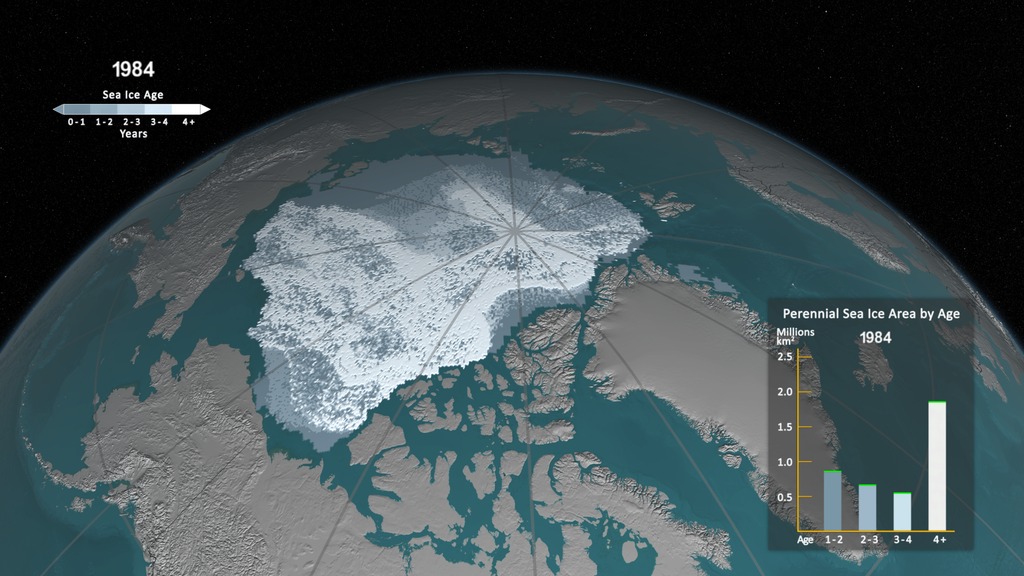
A still image of the annual minimum sea ice age in 1984 with the graph overlay.
SVS animation
Ao contrário do restante, esta parte é assim denominada por conseguir manter-se mesmo durante as estações de maior calor que provocam o derretimento de muitas outras áreas geladas, podendo sobreviver intacta durante mais de nove anos e chegar a uma grossura máxima de quatro metros. 
O aquecimento global e a consequente subida de temperaturas está a reduzir a quantidade de gelo perene que se acumula nas calotas polares. 
Para ter acesso aos diferentes vídeos, ver aqui
Incrível! Ficamos com a certeza do que se está a passar no Árctico e até que ponto é vital preservarmos


credits: NASA/SVS


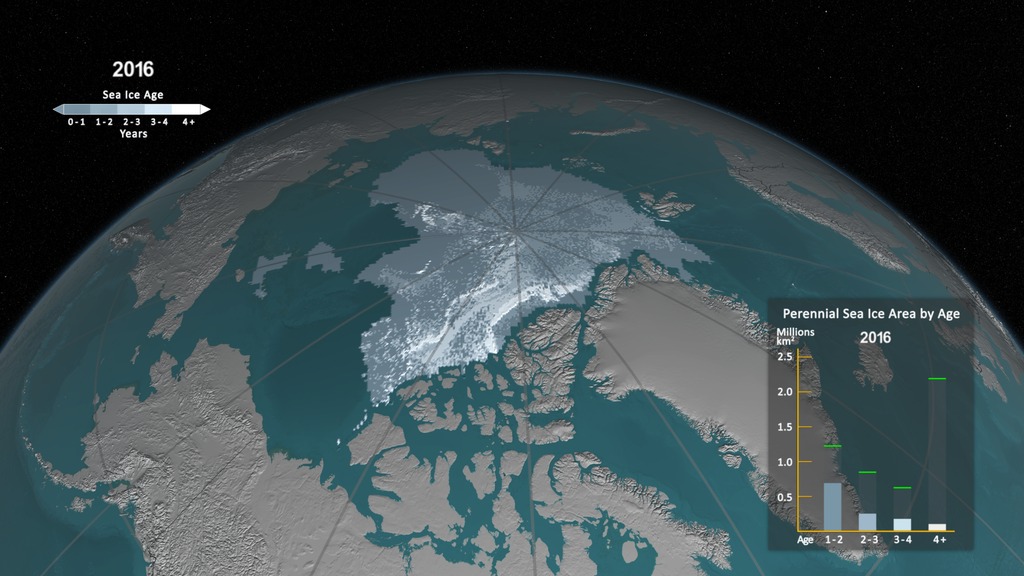
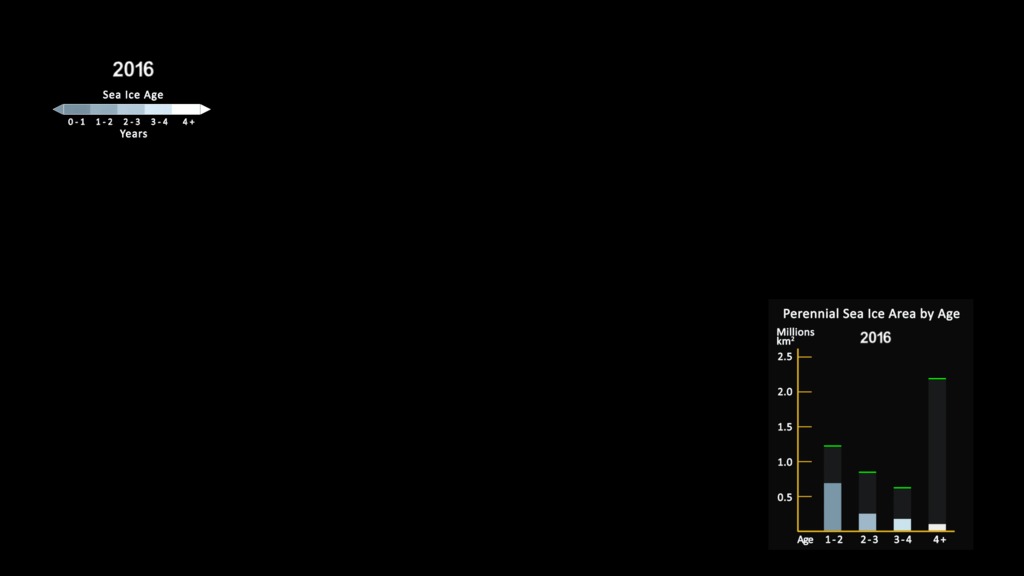
A still image of the annual minimum sea ice age in 2016 with the graph overlay. The green memory bars portray the maximum annual value for each age range seen since January 1, 1984 on the day of the annual minimum.

SVS animation

One significant change in the Arctic region in recent years has been the rapid decline in perennial sea ice. Perennial sea ice, also known as multi-year ice, is the portion of the sea ice that survives the summer melt season. Perennial ice may have a life-span of nine years or more and represents the thickest component of the sea ice; perennial ice can grow up to four meters thick. By contrast, first year ice that grows during a single winter is generally at most two meters thick.
Watch the animation on SVS (NASA) here
This animation shows the annual change in sea ice age at each year's minimum extent. Younger sea ice, or first-year ice, is shown in a dark shade of blue while the ice that is four years old or older is shown as white. 


credits: NASA/SVS
A bar graph displayed in the lower right corner quantifies the area covered by the ice in each age category on the day of the annual minimum. In addition, memory bars shown in green portray the maximum annual value for each age range seen since January 1, 1984 on the day of the annual minimum.
No doubt! We must change our behaviour. We can't continue to ignore the real problem. Raising our voices to help the Arctic.

Geração 'explorer' 
11.12.2016
Creative Commons License
References:
Tek/ Site do dia 
NASA/ Scientific Vizualisation Studio


Saturday, November 21, 2009

Glaciares


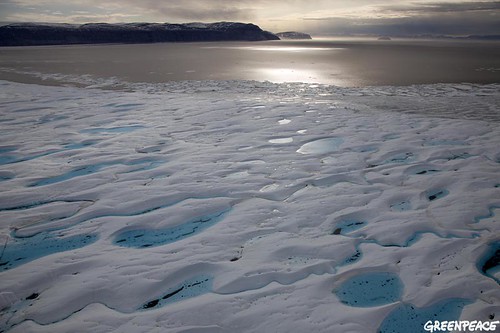
View across Petermann Glacier, one of Greenland's largest and most northerly glaciers.


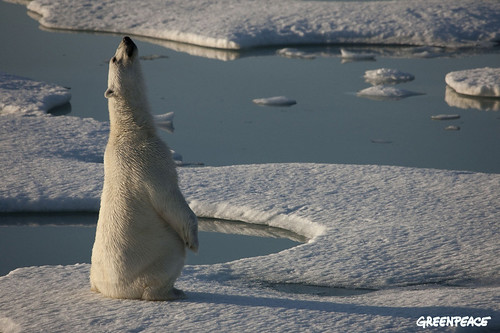
Polar bears cannot survive without sea ice, using it to raise their young


Frida Bengtsson fez parte da campanha que Greenpeace levou a cabo no Árctico, durante três meses, para investigar os impactos da mudança climática. Vê o  seu vídeo aqui


Campaigner Frida Bengtsson reports from the Arctic where Greenpeace has been investigating the impacts of climate change on a three month ship tour...


'Gen' Exploradores Polares

22.11.2009