Showing posts with label educação. Show all posts

Wednesday, April 22, 2015

Dia Mundial da Terra 2015


http://i.imgur.com/


Todos os anos, desde 1970, a 22 de Abril celebra-se o Dia Mundial da Terra. Em 2013, Geração Polar aderiu ao Dia da Terra, mas o nosso blog Geração Verde sempre esteve actuante desde Dia da Terra 2009


Earth Day Poster 2009

A data foi criada em 1970, pelo senador norte-americano Gaylord Nelson que resolveu realizar um protesto contra a poluição da Terra, depois de verificar as consequências do desastre petrolífero de Santa Barbara, na Califórnia, ocorrido em 1969.


Desde então, todos os anos, no dia 22 de Abril, milhões de cidadãos em todo o mundo manifestam o seu compromisso na preservação do ambiente e da sustentabilidade da Terra. O tema de Dia da Terra 2015 é : #It's Our Time To Lead.

Neste dia de cariz educativo escrevem-se frases e poemas sobre a importância do planeta Terra nas escolas, entre muitas outras actividades. 


O Dia Mundial da Terra já conta com mais de mil milhões de actos realizados em prol do ambiente ao longo da história.
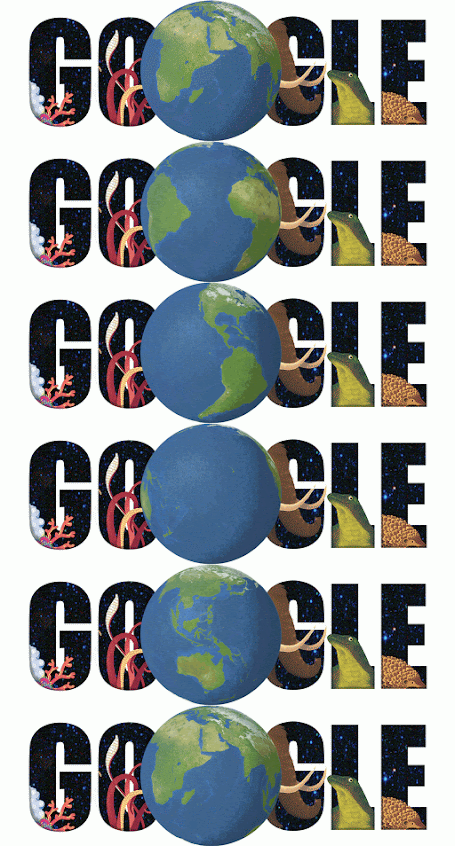


Google doodle Earth Day 2015

April 22, 2015 ! Earth Day’s 45th anniversary could be the most exciting year in environmental history.


Earth Day 2015's theme is #It's Our Time To Lead.

To honor what has become a global observance, an interctive Google Doodle has been created for Earth Day 2015.

The doodle features a spinning globe with various animal animations inside the Google letters. With a click, the animation links to a fun quiz where people can find out “which animal are you?”


MTV News

Earth Day 2015's theme is #It's Our Time To Lead to highlight growing impact on individuals through interactive digital campaign.

Earth Day is a special day for schools! All over the world, teachers and students work on fantastic projects to commit to actions that go beyond the planet.

Let's end this acceleration glacier mass loss! Showing our "face od climate chage".


Glacier Bay National Park © Mark Kelley / UNESCO

Oceans make up 70% of the world's surface. On ‪‎EarthDay‬, UNESCO & Jaeger-LeCoultre honor Marine ‪#‎WorldHeritage‬ with this video spotlight on Glacier Bay National Park and Preserve. 


Have you been to one of the world's 47 Marine World Heritage Sites? Share your photos with UNESCO!


Happy Earth Day !

Geração 'explorer'

21.04.2015

Creative Commons License


Thursday, May 22, 2014

Dia Internacional da Biodiversidade


Hoje, dia 22 Maio celebra-se o Dia Internacional da Biodiversidade proclamado pelas Nações Unidas com o objectivo de aumentar o grau de consciencialização e conhecimentos acerca da biodiversidade.
Celebra-se anualmente a 22 de Maio desde 2000. O Dia Internacional da Biodiversidade foi instituído pelas Nações Unidas para celebrar a Biodiversidade do planeta Terra e para incentivar à sua conservação.
Inicialmente, esta efeméride era comemorada a 29 Dezembro (data da entrada em vigor da Convenção da Diversidade Biológica). 
Devido à proximidade das festas de natal e de fim de ano, a data da celebração foi alterada, sete anos mais tarde, para 22 de Maio, dia do aniversário da aprovação do texto da Convenção sobre a Diversidade Biológica, que teve lugar em 1992
A Biodiversidade é uma das propriedades fundamentais da natureza, responsável pelo equilíbrio e estabilidade dos ecossistemas.


Este ano, o tema é a Biodiversidade Insular, no âmbito da Década das Nações Unidas sobre Biodiversidade.

O tema Biodiversidade Insular foi escolhido para coincidir com a designação atribuída a 2014 pela Assembleia Geral das Nações Unidas como o Ano Internacional dos Países em Desenvolvimento em Ilhas Pequenas. 

As ilhas e as suas áreas marinhas circundantes constituem ecossistemas únicos que possuem frequentemente muitas espécies endémicas de plantas e animais – espécies que não podem ser encontradas em nenhum outro lugar da Terra. 

Esses ecossistemas constituem um legado único da história evolucionária e são tesouros insubstituíveis, constituindo ainda a base da subsistência, da economia, do bem-estar e da identidade cultural de 600 milhões de ilhéus – um décimo da população mundial.

Reserva Natural das Berlengas
foto: autor não identificado

Este ano, o tema Biodiversidade Insular, Portugal elegeu o território da Reserva Natural das Berlengas como sítio das comemorações oficiais. Contudo as condições climatéricas adversas já anunciadas não irão permitir levar a cabo os eventos programados para este dia 22 de maio, sendo obrigados a adiar para o dia 5 de junho, Dia Mundial do Ambiente.


The United Nations has proclaimed May 22 The International Day for Biological Diversity(IDB) to increase understanding and awareness of biodiversity issues. 

When first created by the Second Committee of the UN General Assembly in late 1993, 29 December (the date of entry into force of the Convention of Biological Diversity), was designated The International Day for Biological Diversity. In December 2000, the UN General Assembly adopted 22 May as IDB, to commemorate the adoption of the text of the Convention on 22 May 1992 by the Nairobi Final Act of the Conference for the Adoption of the Agreed Text of the Convention on Biological Diversity. 

This was partly done because it was difficult for many countries to plan and carry out suitable celebrations for the date of 29 December, given the number of holidays that coincide around that time of year.

The theme Island Biodiversity was chosen to coincide with the designation by the United Nations General Assembly of 2014 as the International Year of Small Island Developing States. 


The International Year of Small Island Developing States will celebrate the contributions that this group of countries has made to the world. Small island developing states are home to vibrant and distinct cultures, diversity and heritage.Read more here


The Kluane/Wrangell-St. Elias/Glacier Bay/Tatshenshini-Alsek national parks and protected areas along the boundary of Canada and the United States of America are the largest non-polar icefield in the world and contain examples of some of the world’s longest and most spectacular glaciers. Characterized by high mountains, icefields and glaciers, the property transitions from northern interior to coastal biogeoclimatic zones, resulting in high biodiversity with plant and animal communities ranging from marine, coastal forest, montane, sub-alpine and alpine tundra, all in various successional stages. The Tatshenshini and Alsek river valleys are pivotal because they allow ice-free linkages from coast to interior for plant and animal migration. The parks demonstrate some of the best examples of glaciation and modification of landscape by glacial action in a region still tectonically active, spectacularly beautiful, and where natural processes prevail.


Sea otters | Glacier Bay

Sea otters, like this one, from #WorldHeritage Glacier Bay have more hair than any other mammal - up to 1 million hairs per square inch. Humans only have about 20.000 on the entire head. 

Sea otters are a threatened species, and like over half of the world's marine species, risk becoming extinct by 2100. Biodiversity is vital for the health of our planet & our societies. 

Visit World Heritage Marine Program (UNESCO) and The Kluane/Wrangell-St. Elias/Glacier Bay/Tatshenshini-Alsek

These parks comprise an impressive complex of glaciers and high peaks on both sides of the border between Canada (Yukon Territory and British Columbia) and the United States (Alaska). The spectacular natural landscapes are home to many grizzly bears, caribou and Dall's sheep. The site contains the largest non-polar icefield in the world.

Considerando a grande importância da biodiversidade, é imperativo perservá-la cada vez mais.

Feliz Dia da Biodiversidade !
Happy International Day for Biological Diversity !

Geração 'explorer'


22.05.2014


Creative Commons License